


Schools may have highlighted key historical figures and events that have significantly contributed to change. However, history also remembers even the more minor details—the mundane, the oddities, and the fun little trivial bits.
Whether you are helping your child prepare for a history quiz bee or are just looking to learn more about it, here are some fun historical facts and trivia that might just help:
- Alexander the Great may have had a not-so-great ending. According to accounts and evidence, when he was buried, he might have been suffering from Guillain-Barré Syndrome, a neurological condition that may have rendered him paralyzed but mentally aware.
- Female gladiators existed. Gladiatrices fought in arenas in Ancient Rome just like their male counterparts. However, they were far fewer (and therefore rarer) than male gladiators.
- A Great Dane named Juliana was awarded the Blue Cross Medal during World War II for extinguishing a bomb with pee.
- A lady pirate named Ching Shih is considered one of history’s greatest pirates. Previously a prostitute in China, she was bought and married by Zheng Yi, Head Commander of the Red Flag Fleet. After her husband’s death, she took control of the whole fleet (around 40,000 to 60,000 pirates in all) and clashed with Qing China, the East India Company, and the Portuguese empire.
- Cleopatra, the famous Egyptian queen, was actually Greek and a descendant of Ptolemy.
- Abraham Lincoln is a wrestling Hall-of-Famer in Illinois. Out of the 300 matches he fought in, he only lost one.
- In the Salem witch trials, the accused witches were mainly jailed. Some were hanged, but none were burned alive.
- The shortest war in history was between Britain and Zanzibar. It was called the Anglo-Zanzibar War, and it lasted for 38 minutes. The war was about the ascension of the next Sultan, and it was won by the British.

Photo from: wikigallery
- Joan of Arc routed the English by leading armies with no experience, survived a 60-foot escape leap from a tower, was falsely accused of heresy, and burned at stake, all between the ages of 17 and 19.
- The Ancient Egyptians used slabs of stone as pillows. Back then, when getting into bed, people would place their heads on a stone with a curve in it.
- During World War II, Americans called hamburgers “liberty steaks.” This was because “hamburger” sounded a little too German. At the same time, sauerkraut was re-dubbed “liberty cabbage.”
- In Ancient Greece, wearing skirts was manly. Greeks viewed trousers as effeminate and would mock any men who wore them.
- The Colosseum was initially clad entirely in marble. However, after the fall of Rome, the Goths looted and pillaged the city, taking all of the marble from the Colosseum until it was stripped down to its bare stone setting.
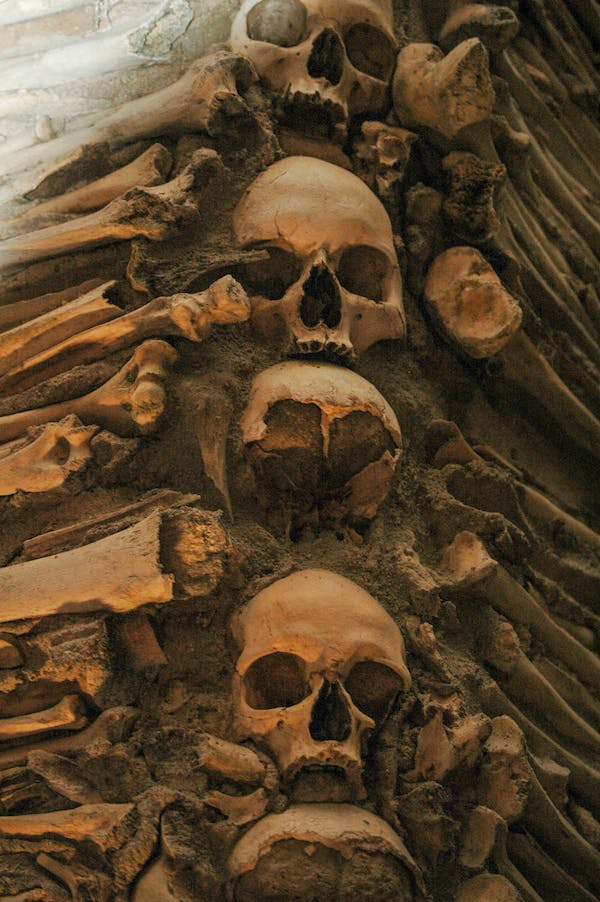
Photo by Deann DaSilva
- Around 1200 bones of some ten human remains were found in the basement of Ben Franklin. These bones were used in his study of human anatomy.
- Karl Benz and Emile Levassor made the first car. It was patented in 1886. Americans did not invent automobiles.
- Pope Gregory IX declared that cats were associated with devil worship and should be exterminated. The disappearance of cats might have contributed to the increase in rat population and possibly the spread of the bubonic plague (Black Death) that killed millions of people in the 1300s.
- Before the 19th century, dentures were made from dead soldiers’ teeth. After the Battle of Waterloo, dentists ran to the battlefield to seek teeth from the thousands of dead soldiers, which they then used in dentures.
- Roman Emperor Gaius loved his horse, Incitatus, so much that he gave him a marble stall, an ivory manger, a jeweled collar, a house, and the title of a senator. Some people believed he would have done the same thing to his other steed Consul if he was not assassinated.
- The 1883 Krakatoa volcanic eruption was so loud that the sound traveled the world four times.
- During the Victorian period, men with mustaches used special cups called “mustache cups.” These specially-made mugs had guards that prevented a man’s mustache from dipping into their warm cup of tea!
- Genghis Khan tolerated all religions. He was interested in learning philosophical and moral lessons from other religions. Despite being a Tengrist, he consulted with Buddhist monks, Muslims, Christian missionaries, and Taoist monks.
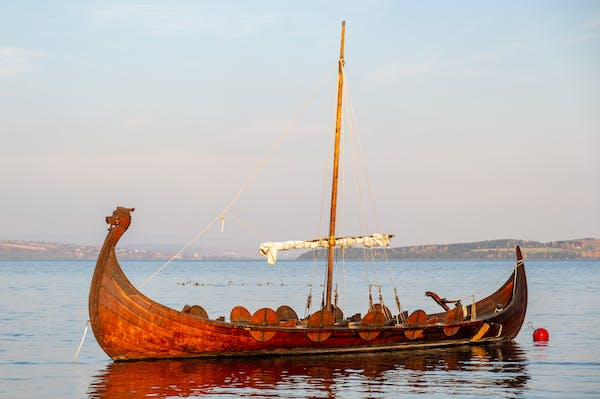
Photo by Barnabas Davoti
- The Vikings were the first people to discover America. Viking chief Leif Eriksson of Greenland landed on the Island of Newfoundland half a millennium before Christopher Columbus did.
- Count Dracula was inspired by Vlad the Impaler, monarch of Wallachia, a Romanian region of Transylvania. Vlad made a fearsome reputation for himself by killing and impaling his enemies’ still-twitching bodies on long sticks he planted outside his castle.
- Ketchup was once sold as a medicine.

Photo by Victor Freitas
- Tug-of-war was once an Olympic sport. From 1900 to 1920, it was part of the track-and-field athletics program.
Frequently Asked Questions
What are three interesting facts about history?
These are three of the most interesting historical facts:
- The Vikings were the first people to discover America. Viking chief Leif Eriksson of Greenland landed on the Island of Newfoundland half a millennium before Christopher Columbus did.
- Pope Gregory IX declared that cats were associated with devil worship and they should be exterminated. The disappearance of cats might have contributed to the increase in rat population and possibly the spread of the bubonic plague (Black Death) that killed millions of people in the 1300s.
- Female gladiators existed. Gladiatrices fought in arenas in Ancient Rome just like their male counterparts. However, they were far fewer (and therefore rarer) than male gladiators.
Is history a pure fact?
History is more than just a set of facts. It also includes the interpretation of facts, which contains some biases. Especially since accounts can differ, the “storytellers” might have access to some, but not all, facts, which can lead to discrepancies in the “stories” they tell.
It is better to consult plenty of historical references when considering historical facts. This way, you’ll have better confirmation between truths and half-truths.
Why is it called history?
The term history has evolved from an ancient Greek verb that means “to know,” The Greek word historia originally meant inquiry, or the act of seeking knowledge, as well as the knowledge that results from the inquiry.